In recent weeks, a curious consensus has emerged in Whitehall. A small group of lobbyists argues that electric vehicle demand has slowed, the Zero Emission Vehicle (ZEV) Mandate is becoming too burdensome, and easing sales targets would support domestic manufacturing.
This perspective is understandable from executives navigating tough product cycles and global challenges. However, as industrial analysis, it misses the mark.
Over the past six months, we have mapped a sector anchored by 14 major commercial projects in cell manufacturing, chemical refining, lithium extraction, and recycling. The data reveals that Britain is quietly building a clean industrial powerhouse:
- £7 billion in committed private and public capital across the value chain.
- £4.2 billion in annual economic turnover already generated by domestic battery companies.
- Over 10,000 direct, skilled jobs rooted in regional industrial centers from Somerset to Sunderland.
The central paradox is that the very policy carmakers want ministers to weaken is the foundation supporting that £7 billion. Weakening the ZEV Mandate will not save British car manufacturing; instead, it risks depriving it of the battery plants needed to survive this decade.
Here is how the economics truly stack up.
1. Britain’s Battery Needs
Building a gigafactory requires patient, multi-billion-pound capital allocation. No one builds a 40 GWh plant on speculation; debt and equity financiers demand long-term, legally enforceable domestic offtake certainty.
By 2035, the UK will need about 115 GWh of battery cells annually, with around 90 GWh required for domestic automotive assembly. Our audit identifies roughly 56 GWh of confirmed, financed domestic capacity:
- AESC in Sunderland: 15.8 GWh supplying Nissan’s EV hub.
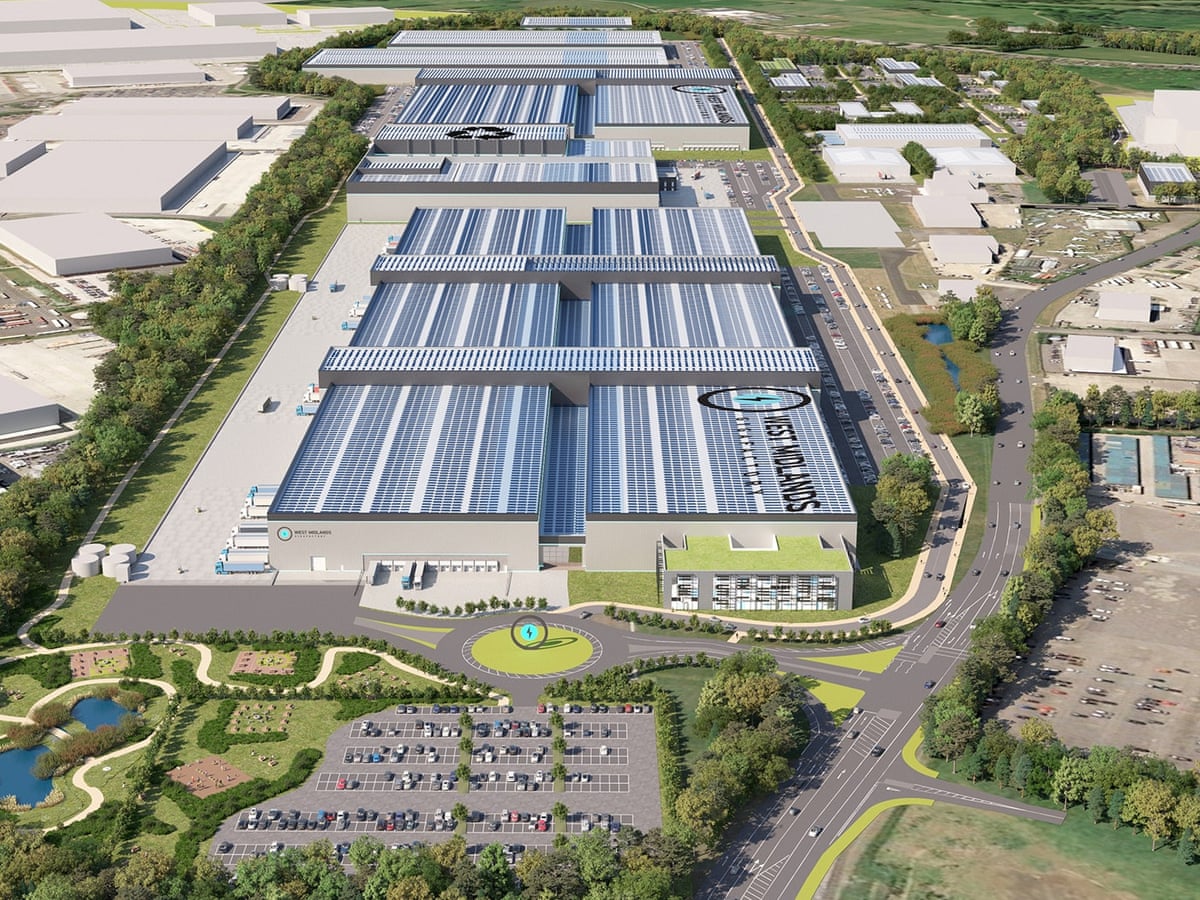
- Agratas in Somerset: £4 billion, 40 GWh facility at Bridgwater supplying Jaguar Land Rover.
This leaves a 55 GWh supply gap, equivalent to two or three additional gigafactories that Britain has yet to secure.
The risk is real. Under the post-Brexit EU-UK Trade and Co-operation Agreement, strict Rules of Origin will impose 10% tariffs on exported vehicles unless their battery packs and cells are produced locally. With over 70% of British-built cars destined for the EU, automakers without domestic cell supply face severe cost penalties.
Weakening the ZEV Mandate signals political hesitation to international boardrooms. If Britain softens its stance, global cell manufacturers will invest in France, Germany, and the US instead.
Watering down the mandate does not protect British car factories; it ensures they will lack the compliant, tariff-free batteries needed for export.
2. The Midstream Vacuum
While cell manufacturing is the UK’s main gap, the midstream is the country’s - and much of Europe’s - acute geopolitical vulnerability.
Currently, the UK has no industrial production of cathode active material (CAM) or anode materials, which together account for 30%-40% of a finished battery cell’s cost.
Meanwhile, China controls over 98% of global lithium iron phosphate cathode supply, 90% of anode-grade graphite processing, and 89% of hard-rock lithium chemical refining. Recent Chinese restrictions on graphite exports have highlighted how exposed Western automotive supply chains are to single-source chokepoints.
The UK has promising projects in development, such as Tees Valley Lithium’s planned £185 million refinery at Billingham and Green Lithium at Teesport. However, both face a challenge unrelated to EV targets: the UK’s high industrial electricity costs.
British chemical refiners pay higher industrial electricity prices than their continental counterparts. Expecting private capital to fund energy-intensive chemical refining in Teesside without addressing this power price gap is unrealistic.
3. Britain’s Captive ‘Mine on Wheels’
Britain has a unique structural advantage that continental Europe cannot match, rooted in geography and history: the UK is an island, and we drive on the left.
Earlier this year, the UK surpassed 2 million electric vehicles on its roads. Because right-hand-drive vehicles are essentially unexportable to second-hand European markets, these vehicles will remain, retire, and be scrapped in the UK.
This creates a captive domestic source of critical minerals. Domestic hydrometallurgical recyclers - such as Altilium in Plymouth and expanding to Teesside, and Recyclus Group in Wolverhampton - can recover over 95% of battery-grade lithium, nickel, and cobalt with far fewer carbon emissions than virgin mining.
Under EU battery rules, recycled mineral content in new cells will soon be legally required. The UK’s vehicle fleet is, in effect, a self-replenishing domestic critical minerals mine - if we stop exporting unprocessed battery waste (“black mass”) to European and Asian smelters before our own refiners can process it.
What Government Needs to Do
The UK has laid the foundation for a world-class battery cluster. Turning these commitments into operational factories requires a coordinated industrial strategy, not regulatory retreat.
We recommend five priority actions for DBIST, DESNZ, and HM Treasury:
1. Hold firm on the ZEV Mandate: Regulatory stability is the most cost-effective investment incentive government can offer. Certainty reduces risk for long-term capital.
2. Deliver power price relief via BICS by April 2027: Implement the British Industrial Competitiveness Scheme on schedule to cut £35-£40/MWh from industrial power bills, enabling final investment decisions for Teesside refiners.
3. Appoint a Minister-led dealmaking team for Coventry: The shovel-ready 60 GWh GreenPower Park at Coventry Airport is the UK’s best opportunity to close the 55 GWh deficit. Securing an anchor cell manufacturer requires proactive, high-level negotiation.
4. Restrict exports of unprocessed black mass: Treat end-of-life battery scrap as strategic national feedstock, not municipal waste, to ensure domestic hydrometallurgical refiners have a guaranteed supply.
5. Modernise 2008 waste regulations and mandate Battery Passports: Complete Defra’s consultation to update producer responsibility rules for the electric era, and introduce Digital Battery Passports by 2027 to verify mineral origin and carbon footprint.
The Bottom Line
The global shift to clean transport is accelerating and becoming more competitive. The decisions facing ministers are difficult but clear.
The UK automotive sector supports over a hundred thousand jobs, directly and indirectly. These jobs will not be preserved by continuing to produce internal combustion engines in an electrified world. They will be secured by ensuring Britain builds the battery cells, chemical refineries, and recycling networks that future vehicles require.
In the global race for industrial capital, the worst signal ministers could send is that Britain is losing its resolve.



.svg)