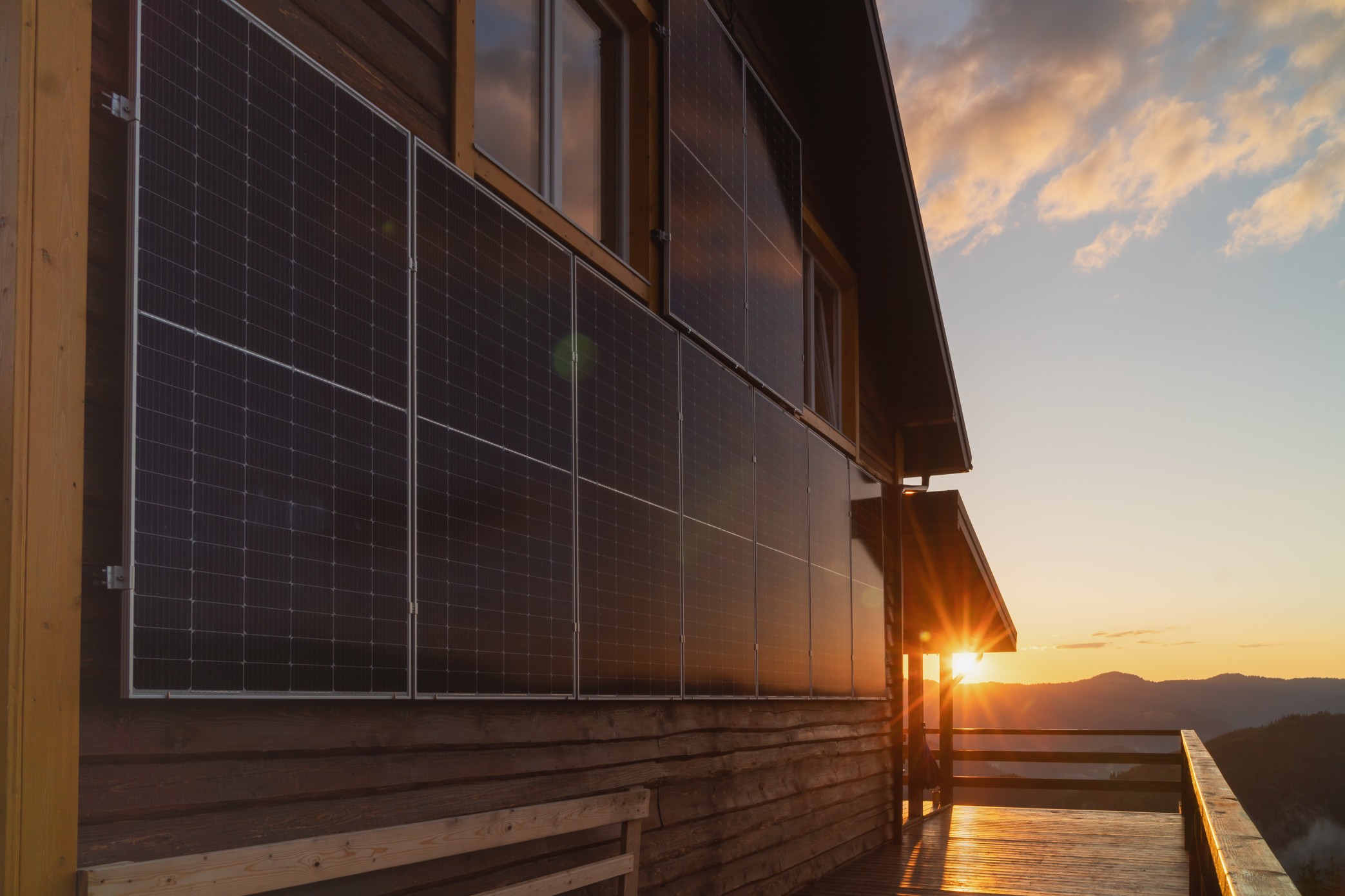
As plug-in solar technology prepares to enter the UK market, we examine its benefits, potential challenges, how it operates, and the regulatory changes required for adoption.
Plug-in solar systems connect directly to a standard plug socket, rather than being hardwired into a home's electrical panel. While these systems are already available for residential use in mainland Europe, UK regulations previously prohibited connecting solar panels to standard wall sockets. The relevant BS 7671 wiring rules have now been updated to allow this.
Plug-and-play solar systems are compact, DIY grid-tied packages that include panels and a microinverter. They plug directly into the UK’s standard 3-pin socket and can power home appliances. Major retailers such as Ecoflow, Lidl, Iceland, and Amazon plan to offer 800W plug-in solar systems once the new regulations take effect, which the Department for Energy Security and Net Zero expects by summer.
Plug-and-play solar kits typically feature one or two lightweight, often foldable panels and a microinverter. Their main appeal is simplicity: they require no technical expertise, costly infrastructure, or professional installation. These kits are suitable for balconies or outdoor spaces and are ready to use out of the box.
The DC electricity generated by the panels is converted to alternating current by the microinverter, which automatically synchronizes with the home’s electrical circuits. This ensures that the generated energy is used before drawing additional power from the grid. Because the system plugs into a socket, the power flows directly into the home's circuit.
There are two primary photovoltaic (PV) technologies used in plug-and-play solar systems: Interdigitated Back Contact (IBC) and heterojunction (HJT) solar cells.
IBC technology, developed since the 1970s, places metal contacts on opposite sides of the cell, unlike standard designs. This increases output and power conversion efficiency (PCE) by reducing obstructions in the cell's active area, allowing more photons to reach the semiconductor junction. With contacts on the rear, shading losses are minimized, and modules can be placed closer together, reducing resistance and improving efficiency. IBC cells can be made in various shapes and sizes and are less affected by temperature changes.
The main absorption layer in an IBC cell is typically a doped crystalline silicon wafer, most often n-type (doped with phosphorus), though p-type (doped with boron) and polycrystalline silicon are also used. Efficiency is further enhanced by diffusion layers, thin-film surface passivation, and surface trapping structures that reduce front surface recombination. An anti-reflection coating, such as silicon oxide, silicon nitride, or boron nitride, also improves open-circuit voltage and short-circuit current density.
HJT PV cells differ from conventional homojunction cells in their material composition and structure. While homojunction cells use crystalline silicon, HJT cells combine monocrystalline silicon, amorphous silicon, and indium tin oxide (ITO). The absorber layer consists of three layers, with crystalline silicon sandwiched between amorphous silicon layers, each doped differently. ITO serves as the transparent conductive oxide layer on both sides of the junction, connected to the metal contacts.
HJT cells generate energy by absorbing photons into the semiconductor junction, exciting electrons and creating a current. All three semiconductor layers absorb photons, with most conversion occurring in the crystalline silicon layer. The multiple layers ensure fewer photons are missed, resulting in higher conversion efficiencies. The doped amorphous silicon layers also reduce surface recombination by acting as buffer layers, optimizing charge carrier movement.
The main advantages of HJT cells are their high PCE and efficiencies exceeding 26%, making them ideal for compact plug-and-play systems. Like IBC cells, they are less affected by temperature fluctuations than conventional cells.
The discussion around plug-and-play solar in the UK is possible only because of recent regulatory changes. Previously, BS 7671 wiring regulations made it illegal to connect a solar panel to a wall socket due to safety concerns, including fire risks and lack of certification for electrical shock and fire hazards.
The new BS 7671 Amendment 4 will legalize plug-and-play solar in the UK from summer 2026, provided products meet updated safety standards. This amendment introduces new safety requirements for electrical installations, including plug-in solar systems. A key provision is the 800W wattage limit, which prevents household wiring from overheating while still providing meaningful power. The UK government is also updating the G98 distribution code to include plug-in solar kits, requiring users to notify their District Network Operator (DNO). This helps maintain grid balance and ensures safe connections.
This regulatory shift is part of a broader UK Government initiative to promote cleaner energy, including the Future Homes Standard (FHS), which will require most new homes to have on-site renewables, primarily solar. Since apartments may not have built-in solar capacity, the new regulations offer plug-and-play systems as an alternative for high-rise buildings.
Despite the enthusiasm for plug-and-play solar, some industry experts remain cautious. One concern is that BS 7671 applies to installations, not the internal design of plug-in systems. Once a device exports energy to an electrical installation, it becomes a supply source and falls under Section 551 of the IET Wiring Regulations, which states that a generating set should not be connected to a final circuit via a plug socket. Domestic circuits are designed for a single supply point, so protective devices and isolation procedures may not accommodate plug-and-play systems. This could lead to localized overloading, altered residual current device (RCD) behavior, earthing conflicts, and the risk of plugs remaining live after disconnection, posing safety hazards.
There is also concern that some system owners may not notify DNOs as required, potentially causing safety and grid issues due to incomplete information. Additionally, suppliers, especially online, might sell panels that do not meet safety standards, increasing risks. While plug-and-play systems offer significant benefits, it remains to be seen whether all safety concerns have been adequately addressed.



.svg)