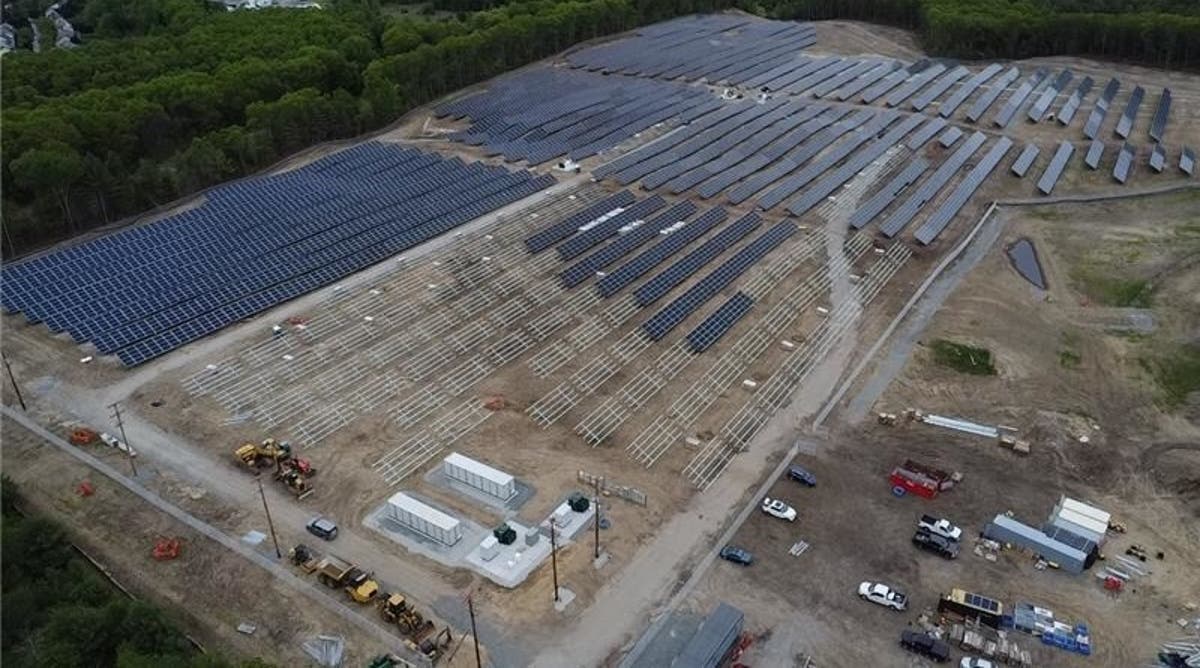
Solar power plants have become the fastest and most cost-effective way to add kilowatts to the nation’s grid. They also help preserve farmland from real estate development and can transform contaminated sites into valuable community assets, as demonstrated by a new solar power plant in Acton, Massachusetts.
The concept of repurposing former industrial sites for renewable energy is well established. In 2010, the US Environmental Protection Agency launched the Re-Powering America’s Land program to promote clean energy development on thousands of contaminated sites nationwide, offering a site finder and best practices guidelines.
Not every classified site is suitable for solar projects - some are too contaminated, rugged, or remote, while others may be reclaimed for different uses. However, many sites remain viable for solar development. Over the past 15 years, brownfield-to-solar projects have become a mature sector within the solar industry, complete with specialized expertise and systems.
The Acton project, at 7.1 megawatts, is modest compared to larger solar installations but highlights the industry’s ability to convert contaminated land into clean energy facilities. A key challenge is securing racking systems to the ground. For Acton, contractor Distributed Energy Infrastructure partnered with Terrasmart, a US solar racking firm known for using ground screw foundations alongside traditional pile-type foundations. Ground screws are twisted into the soil, making them effective in challenging terrains and various soil types.
Terrasmart explains that ground screws are essential for solar foundations because they perform well in tough conditions, complementing driven piles and ballasted foundations in their portfolio.
Terrasmart has used ground screws in other projects, such as a four-site portfolio in New York totaling 26 megawatts. The company credits ground screws with enabling smooth racking installation over rocky soils, frost layers, and uneven ground, saving about $500,000 in site preparation. The flexible design also minimized environmental impact and reduced installation time by over 30 percent.
To support industry growth, Terrasmart began manufacturing ground screws in-house last summer, as part of a vertical integration strategy to cut costs, increase production, and offer a wider range of screws. The company’s manufacturing capacity is set to support nearly 500 megawatts of new PV projects. The new production line includes twelve work stations, an induction heater, forge, plasma cutter, stamping press, three-hole punch and set nut welder, and six helical welders.
Terrasmart President Ed McKiernan stated that bringing ground screw production in-house streamlines the supply chain, maximizes availability for qualifying solar projects, and helps meet domestic content requirements, benefiting customers, the solar industry, and the broader US economy.
Terrasmart is a division of Gibraltar Industries, a New York-based racking technologies firm with a portfolio of 6,000 solar power plants totaling 25 gigawatts.
Solar Builder highlighted additional features of the Acton project, which was a finalist for its Project of the Year 2025 award. The site, once home to a chemical manufacturing facility, was designated an EPA Superfund site due to significant soil contamination, including asbestos. The Acton project repurposes this land for productive use, preserves farmland and open space, and created nearly 40 local jobs during construction.
The project delivers clean energy through a community solar model paired with battery storage, enhancing local grid resilience. It also increases the town’s tax base and supports Massachusetts’ SMART and Clean Peak Standard goals by reducing grid strain during peak demand periods.
Solar Builder also noted the challenges of brownfield-to-solar projects. Workers required hazmat training, and the team had to navigate old concrete slabs and structures to minimize site disruption. The project involved coordination with six regulatory agencies and preparation for unexpected issues. When asbestos was found, certified specialists managed its removal under regulatory oversight.
The Acton site’s energy storage component is notable, especially as some officials have questioned the existence or affordability of energy storage. As a community solar project, the Acton array is designed to maximize value for local ratepayers, with energy storage playing a key role.
Community solar began in the early 2000s as a subscription model to help residents access solar power without needing their own panels. Initially, subscribers paid a premium, but as solar costs have dropped, community solar now allows all ratepayers to save money.
Given these benefits, it is not surprising that Syncarpha, the developer behind the Acton project, has focused on the community solar market. The company notes that community solar has been a major area of growth over the past five years and is expected to drive future expansion.




.svg)