BYD, a leading Chinese new energy vehicle manufacturer, has introduced an EV charger capable of charging a vehicle from 10% to 97% in just nine minutes when paired with the second generation of its Blade Battery, launched alongside the charger.
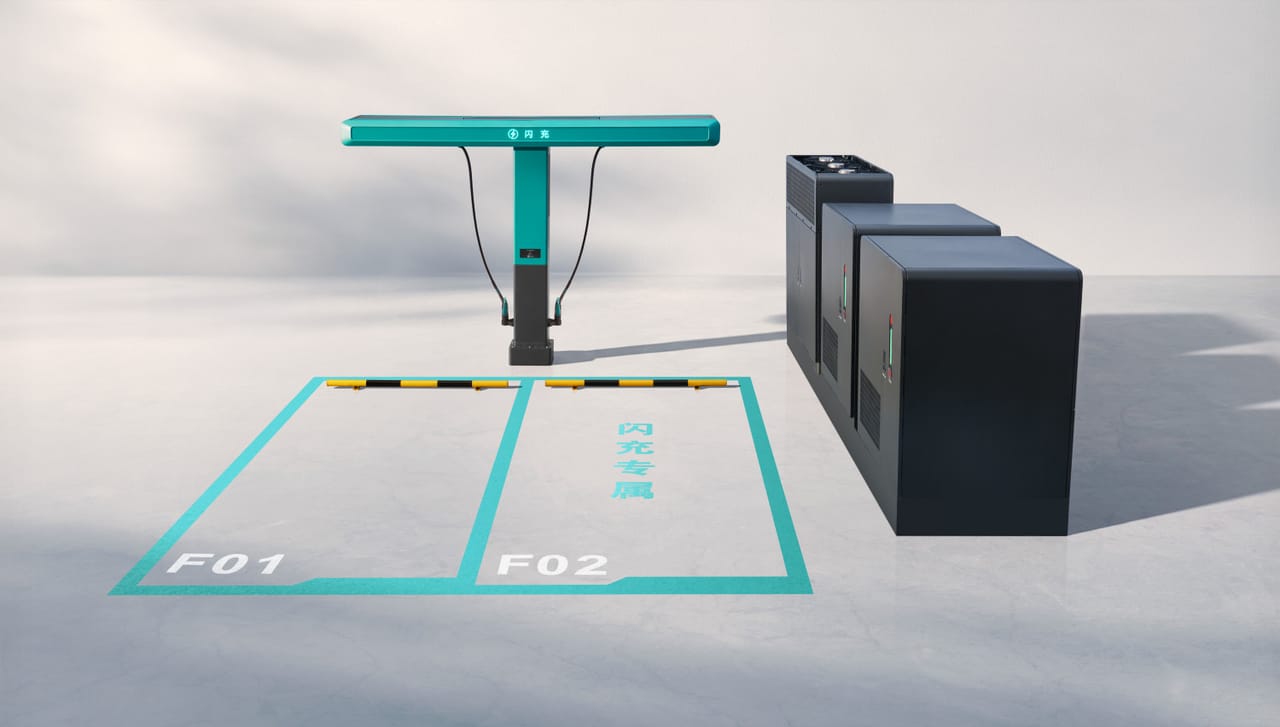
The new Flash Charging product delivers up to 1,500kW through a single connector. With a 1.5MW output, the Flash Charger features 1,500 amps of current and a 1,000-volt base architecture. It builds on BYD’s previous megawatt chargers and requires a compatible vehicle battery to achieve full power.
BYD has already installed 4,239 Flash Charging stations across China and expects to have 2,000 more in operation by the end of the year. To address grid constraints, the chargers are paired with ultra-fast-discharge energy storage systems (ESS), which recharge at slower speeds and act as both an energy reservoir and a power amplifier for high-power charging.
The T-shaped design of the chargers, inspired by traditional refueling, addresses concerns about conventional charging stations with heavy connectors and cables that can become dirty or wet. The new Flash Chargers feature a lighter connector for a more convenient charging experience.
BYD plans to make its Flash Charging stations available worldwide, with further details on the global rollout to be announced soon.
The first vehicle to feature Flash Charging and the second-generation Blade Battery will be the DENZA Z9GT from BYD’s premium brand, with final specifications to be released in the coming weeks.
The new Blade Battery offers higher energy density and slower degradation. Blade Battery 2.0 has a 5% increase in energy density compared to the first generation, enabling longer driving ranges on a single charge. BYD describes it as the foundation for advancements in Flash Charging.
The Blade Battery is a lithium iron phosphate (LFP) battery. Its second generation introduces the FlashPass Ion Transport System, which reduces internal resistance and heat generation. The increased energy density results from changes to the anode, including high-throughput electrode restructuring and graphite particles aligned perpendicular to the electrode plane, reducing lithium-ion transport resistance for faster intercalation.
Blade Battery 2.0 also features a solid Electrolyte Interphase (SEI) layer that is ultra-thin for higher ionic conductivity and ultra-dense for chemical stability. It has passed extensive safety tests, showing no thermal runaway under various conditions. Compared to Blade 1.0, the new battery architecture has 2.5% lower degradation.
Both the new EV battery and charger perform well in extreme conditions. BYD states that these technologies are the result of in-house development and extensive research into consumer concerns about electric mobility.
Despite significant progress in EV market adoption, BYD notes that many customers remain focused on battery capacity and range, often paying premiums for even a few extra kilometers.


.svg)