Steel is a ubiquitous material, used in countless applications worldwide. As a category, steel production is responsible for 7 to 8% of global CO2 emissions. It is a major component in electric vehicles (30-40%), forms the foundation of wind turbines (66-79%), and makes up more than half of the materials in electric motors.
This is why Volvo’s efforts, both in Volvo Cars and the larger vehicles produced by Volvo Group, to source fossil-free steel are so significant.
The Process
The concept of fossil-free steel emerged from a collaboration between mining company LKAB, steel producer SSAB, and energy company Vattenfall. After initial lab trials, the three companies joined forces to explore a viable path toward fossil-free steel production.
Achieving this required substantial effort from all partners to define the new process, secure investments, identify customers, and scale up to full production.
The approach uses fossil-free electricity generated by Vattenfall’s hydroelectric power plants. This clean energy powers LKAB’s operations and is used to produce green hydrogen, a crucial element in replacing the traditional coal-fired and more recent natural gas-fired iron smelting processes.
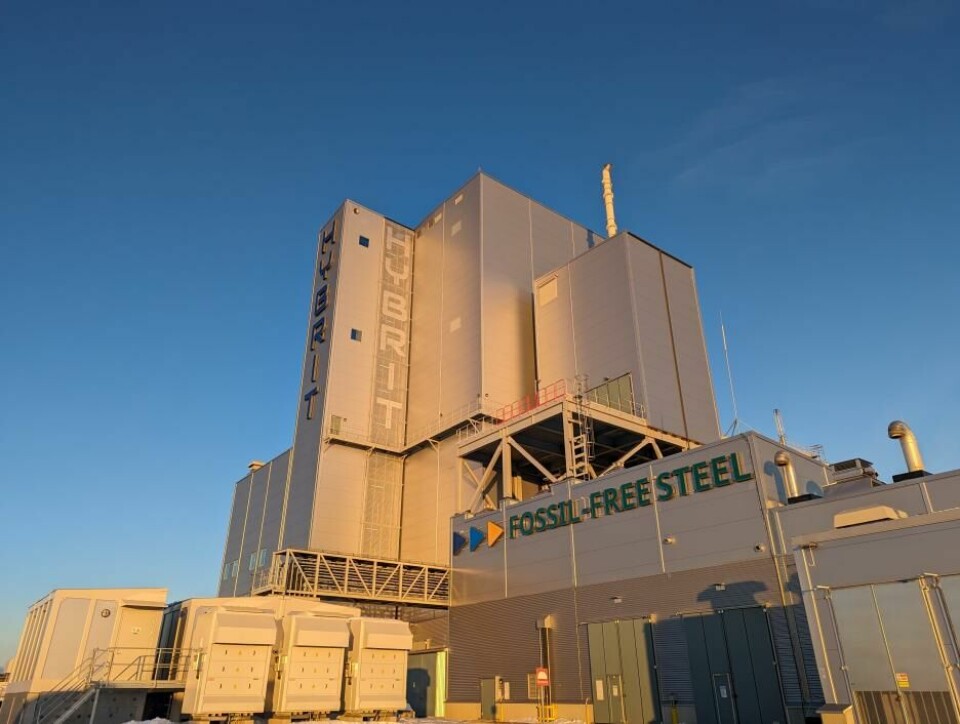
Fossil-free steel production begins with LKAB, which developed the Hydrogen Breakthrough Ironmaking Technology, or HYBRIT. Vattenfall has created a YouTube series explaining HYBRIT in detail for those interested in learning more (link to first video).
Iron ore reduction can be performed with methane, but recent advancements now allow it to be done with hydrogen gas. Instead of emitting CO2, the hydrogen-based process produces water as its primary emission.
Iron ore reduction is the most energy-intensive part of steel production, so converting it to a fossil-free process is a major environmental achievement. The resulting product, called sponge iron, serves as the key feedstock for SSAB’s smelters, which produce steel from LKAB’s mined iron. Volvo Construction Equipment has shared a video detailing LKAB’s process for producing fossil-free steel.
The Demonstration Plant
Transforming one of the world’s dirtiest and most energy-intensive industries in just a few years is a formidable challenge. After developing the process in the lab and testing its components at a plant near Stockholm in Oxelösund, Sweden, the next step was to build a full demonstration plant.
The demonstration plant aimed to test the complete process, resolve any issues, and develop a scalable method for fossil-free iron processing. Northern Sweden was chosen for two main reasons:
First, LKAB operates a large iron ore mine in Kiruna, Sweden, which is a short train ride from Luleå, where the ore can be further refined. Processing the ore into sponge iron near the mine reduces transportation costs. LKAB’s smelter in Luleå produces 2.5 million tonnes of sponge iron per year.
Second, Northern Sweden is rich in hydropower resources, thanks to its many fjords and heavy precipitation. This abundance of clean energy is essential for fossil-free steel production.
Vattenfall supplies clean electricity to power operations and produce hydrogen gas. LKAB produces iron ore and converts it into sponge iron using sustainably produced hydrogen, after which SSAB transforms the sponge iron into usable, fossil-free steel.
To build the demonstration plant, the team constructed a 4 MW hydrogen electrolyzer and a large underground lined rock cavern (LRC) hydrogen storage facility. Originally developed for methane storage, LRC technology has been adapted for hydrogen. A new rock cavern was excavated and lined with steel plates coated in multiple layers of sealant to contain the hydrogen.
The goal was to produce the first batch of fossil-free steel by 2025, but the team delivered ahead of schedule. Despite challenges, including the global pandemic, the scalable HYBRIT process was validated, and SSAB delivered the first batch of renewable steel to Volvo last year.
This achievement marks the beginning of a larger journey. The next step is to scale the process to replace LKAB’s 2.5 million tonne per year smelter in Luleå and the 1.5 million tonne per year smelter in Oxelösund.
Everything starts with energy, requiring even more of Vattenfall’s clean hydro power to operate a massive new hydrogen electrolyzer plant. The ramp-up is underway, with excavation of a full-scale 100,000-120,000 cubic meter underground hydrogen storage facility using the same LRC technology as the demonstration plant.


.svg)